Part I – Zanzibar to Tarangiri

In February 2026 we flew to Zanzibar for a few days, and then went on a Safari to the Serengeti.
Zanzibar is an island off the coast of Tanzania in east Africa, a few degrees south of the Equator.


We flew Air France – 20 hours of flying, with a brief stop in Paris. Arrived in Zanzibar late in the evening.


In Zanzibar, we stayed a few days at a lovely little resort in the south near Cape Kizimkazi.


Weaver bird nests hung in the palm trees.

Much of the coast has a broad offshore shelf. We had to wait for the tide to come in before we could go for a swim.

When the tide came in, it covered the shelf to a depth of about four feet. From our breakfast table, we could watch sailing dhows going by. The wooden hulled dhows were working boats, sailing to and from the fishing areas.

After a couple of days of rest, we took a snorkeling tour.

The undercut shoreline suggests that the offshore shelf was created by erosion. This part of the island, at least, appeared to be composed of uplifted coral.


The snorkeling, at an offshore reef, was excellent. Afterward, we were dropped off at a small offshore sandbar.


We watched the guides set up simple sunshades on the sand, and then tables and chairs.

Then, the boatmen set up barbeques, and cooked up a tasty seafood lunch.

Lunch was followed by a big fruit salad for dessert.

We had our last outdoor tropical dinner at the resort, and left early the next morning.

.
We hired a car and driver for the trip to Zanzibar city, with a couple of stops along the way.

The first stop was at a Monkey Park Reserve. The parking area was overcrowded with tourist vans…

We went for a walk in the forest, looking for monkeys.

We did see some monkeys.

But there were definitely more tourists than monkeys!

Our next stop was at one of Zanzibar’s many spice farms. We had a delightful private tour. Here our guide is showing us fresh Nutmeg.

This is a cinnamon tree. We scraped off some bark, and it was exceptionally fragrant and flavourful!

At the end of the tour, we were decorated with flowers.

Continuing to the city, we settled in a grand old hotel in Stonetown.

The hotel had a pool and a nice beachside lounge area, with exceptionally slow drinks service (and no alcohol, too boot!).
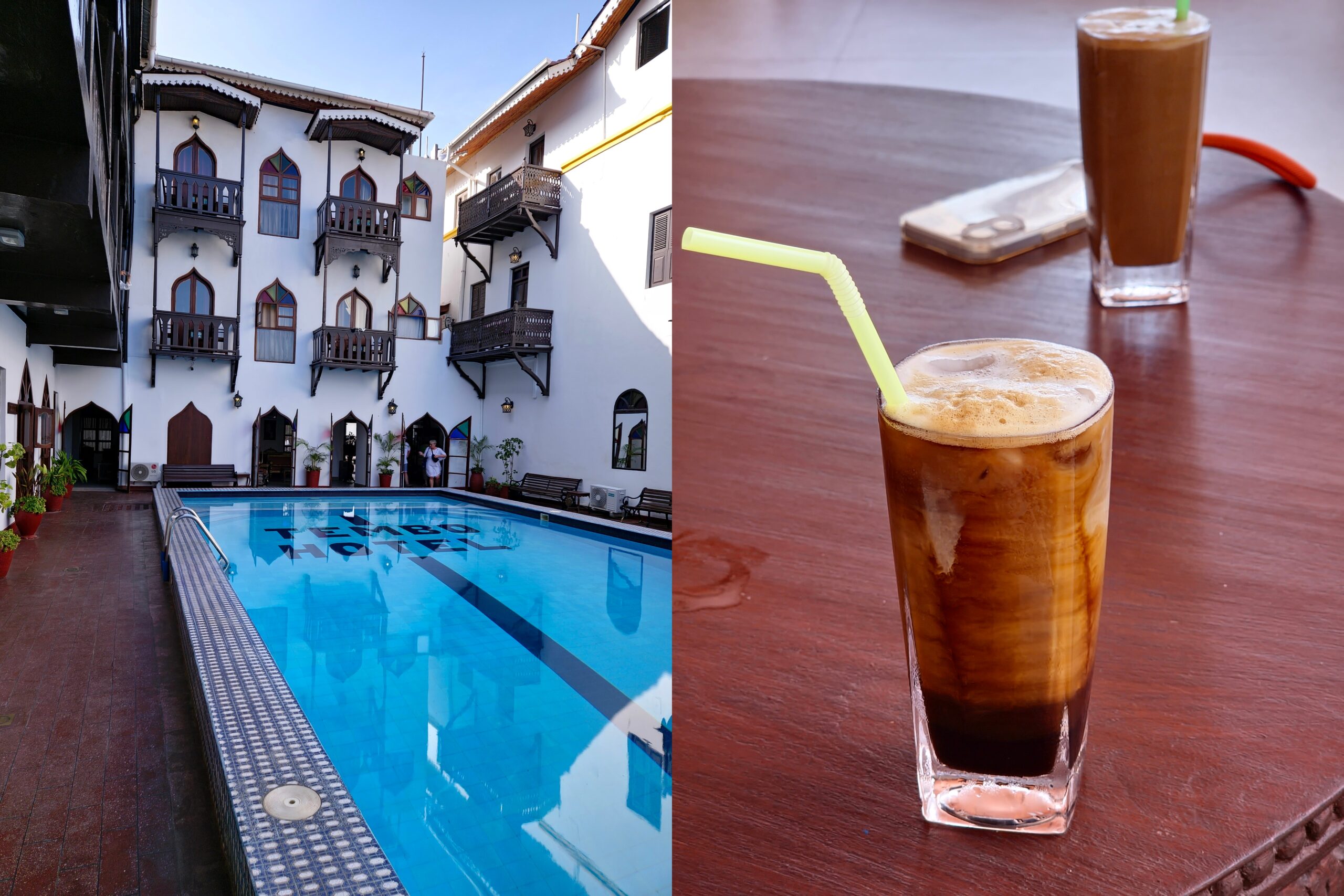
In the evening, the Zanzibar Flippers entertained us on the beach:

At the ATM, we loaded up on local currency. Each of these 10,000 shilling bills is worth about $5 Cdn.

We took a walking tour of the old city. Jan was excited to come across the traditional Hammam, or spa. She booked a treatment later in the day!

One of the many decorative doors in Stonetown:


Triple locking the doors seemed to be common practice….

A school for girls, during the lunch break:

We had excellent cups of coffee at a rooftop coffee house.

Nutmeg at the spice market:

The fish market:

Tiny fish:

Big fish!

The next morning, we flew to Arusha.


We settled in to the Rivertrees Country Inn, where we met the rest of our Safari group.

We had a couple of nights at Rivertrees, in this comfortable cabin.

Our first Safari outing was to nearby Arusha National Park. Our group of 16 drove there in four Land Rovers, and then we went for a walk. This would be one of only two walks in our entire Safari.

Arusha Park is on the slopes of Mt. Meru, a dormant volcano.

We were escorted by two Park Rangers with guns.

We saw our first warthogs. Those tusks look fierce, but their main diet is grass.

We also saw our first giraffes. They are amazing creatures!

An acacia bush with imposing thorns. Acacias are the favourite browse for giraffes. The giraffes have very tough tongues, and aren’t bothered by the thorns.

The following morning, the Land Rovers are packed up and we head out bound for Tarangire National Park.


Along this fairly desolate stretch of highway we spot scattered Maasai homes surrounded by fences made of acacia branches. These settlements are called bomas.

The Maasai are herders, tending cows, sheep and goats.

We encounter a large crowd of tourist vehicles in the muddy parking lot at the entrance to Tarangire park.


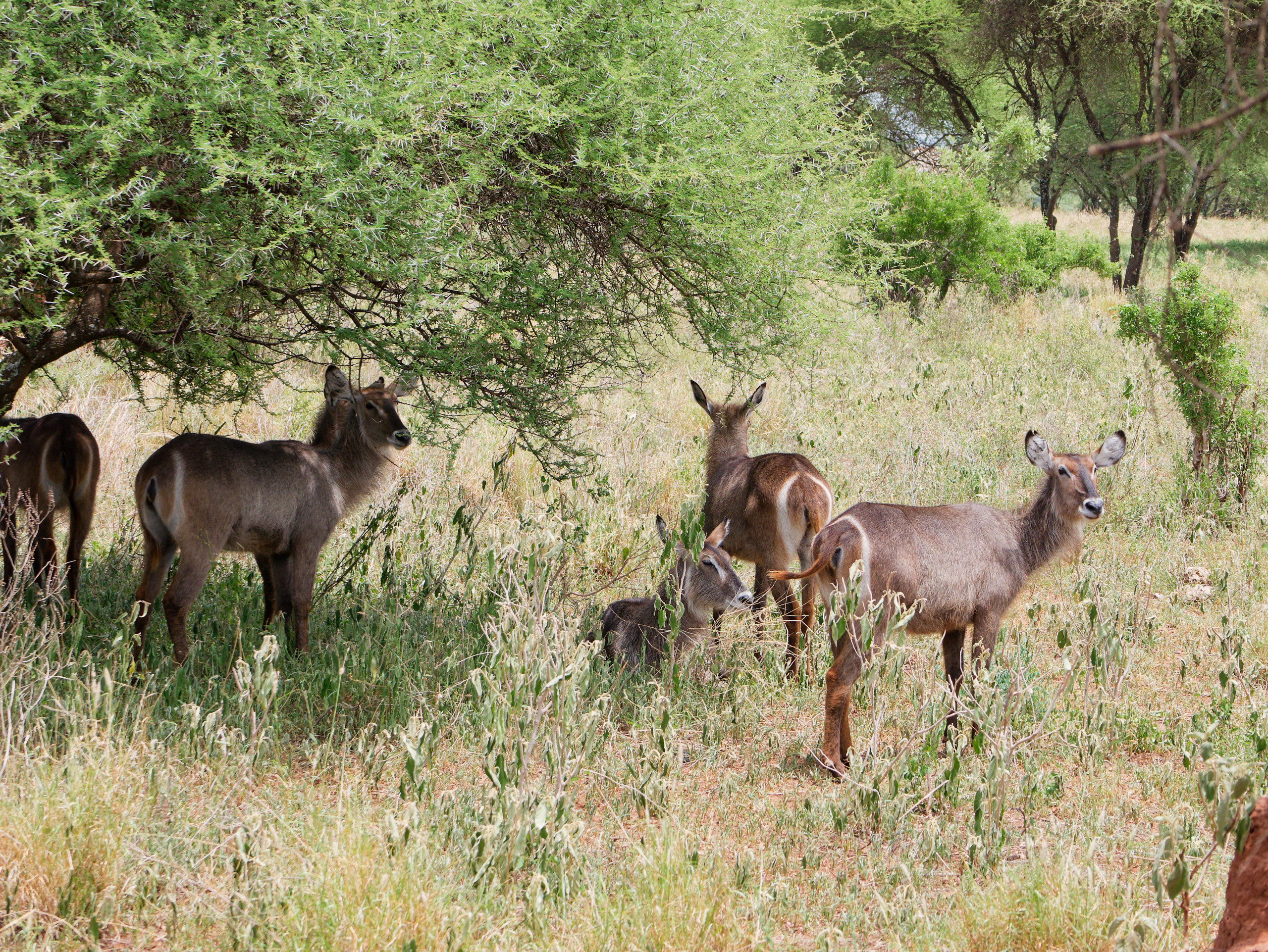
Once through the park entrance, we immediately encounter wildlife. Wildebeests (Gnus) and Zebras are plentiful and often seen together.


Hanging in this tree are several weaver bird nests. There are many different kinds of weaver birds in Tanzania.

I was very excited to see ostriches!

There are many colourful birds everywhere we go. Below is a lilac breasted roller.


Two views of a red-and-yellow barbit on a termite mound.


The superb starling.

A tiny red bishop in the grass.

A weaver bird nest.

Guinea fowl. We saw these comical birds everywhere. They forage among the grass and bushes for insects.


A group of Impala. Easily identified by the distinctive markings on their rumps.
Here in Tarangire, there are many impressive baobab trees.

We spent two nights at the Tarangire Safari Lodge.

Our accommodation consisted of a semi-permanent tent structure. Very comfortable inside, with full plumbing.

Our tent had a grand view across the river valley.

Eland – the largest antelope species.


Elephants! This group of male elephants was contentedly grazing near the road.

One of the elephants grazes its way toward us…


… and crosses the road.

A baobab tree. The massive trunks store water, which the tree can use in the dry season. Baobabs are often called the world’s largest succulents.

This baobab has had its bark stripped by elephants. In the dry season, when the grass is brown and the rivers are dry, the elephants will strip bark off the baobabs to access their moisture.

A handsome black-backed jackal.


Giraffes. They are usually found in small groups.

Ostriches. These birds are eight feet tall, and have impressive legs!

Like most of the animals here, the ostriches are grazers.

Termite mounds are everywhere. The termites have a complicated ecosystem underground involving the cultivation of fungus. The mounds are riddled with holes for ventilation. The towers catch the wind to aid in the ventilation.

A couple of crowned storks.

A sausage tree. Jan really wanted to get her hands on one of these sausages…

In another tree, our guides spotted a leopard having a snooze.

A lion cub takes a yawn, while its parents snooze on another tree in the background.

A group of elephants having a mud bath in the river.

.

The group wanders off after they are finished bathing.

Another group arrives immediately. This youngster is excited to get to the mud pool!

This group is more sedate, and instead of immersing in the pool, they simply spray mud over their backs.

Happy young elephants.

The Land Cruisers quickly gather if there is a lion to be seen.

We crowd in and indeed, there is a lion resting in the grass.

The next morning we depart Tarangire. We have a long drive ahead of us to get to our Serengeti camp. We have little time today for wildlife viewing, but we do have to wait for the zebras to clear the road!

.